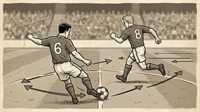
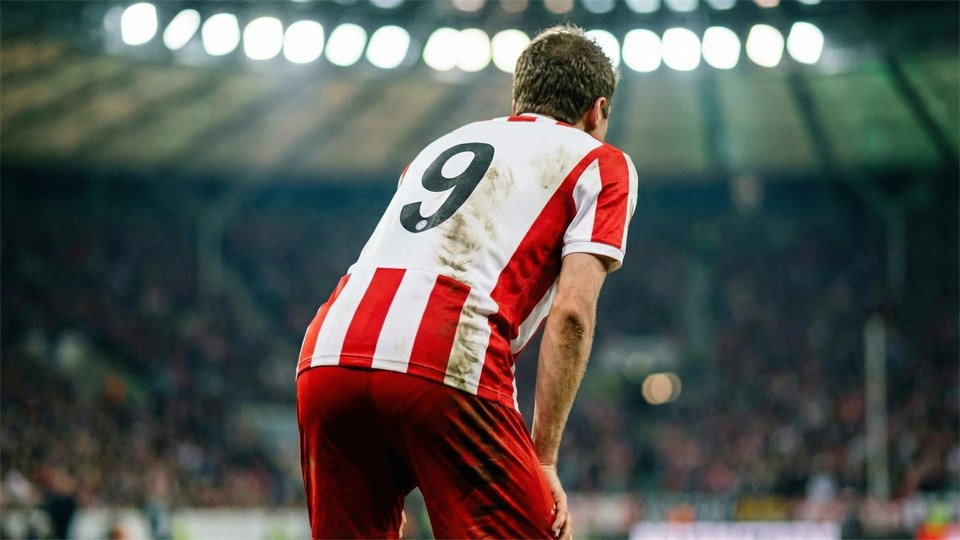


Football is constantly evolving, and new tactical roles are emerging all the time. One of the most fascinating and discussed roles in recent decades is the so-called false nine. But what does it actually mean, and why do coaches, experts, and fans all talk about this special striker role? In this article, you’ll get a thorough yet easy-to-understand overview – with concrete examples, explanations, and illustrations.
A false nine (or "false nine" in English) is not just a striker who scores goals. The role differs significantly from the classic number 9, who typically plays high up the pitch and is constantly seeking goal-scoring opportunities in the box. A false nine starts as a center forward but often moves away from the opponent’s defensive line and drops deeper into the pitch – almost like a midfielder.
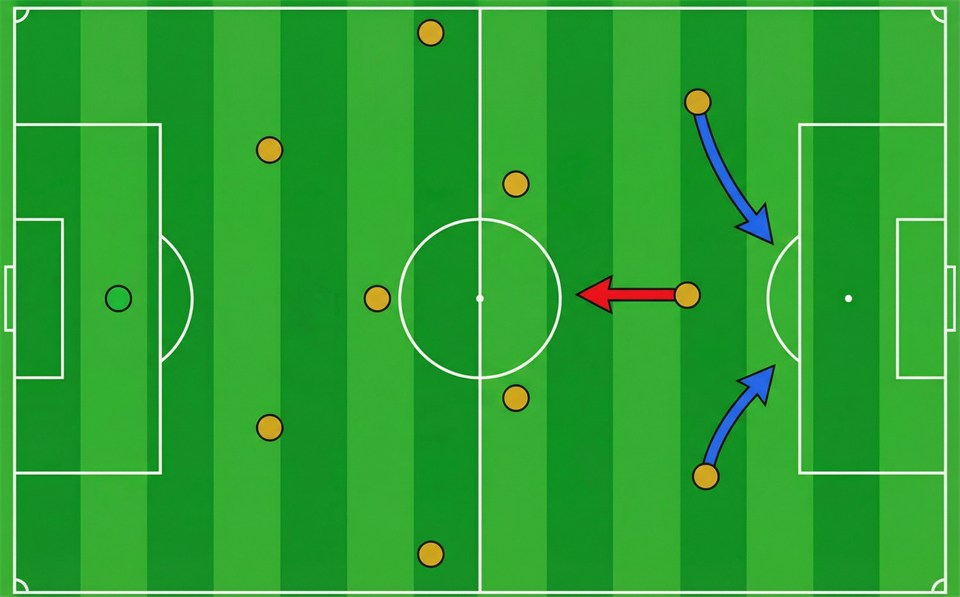
This creates confusion for the opponent’s defenders: Should they follow the striker and thus leave space behind them? Or should they stay in line and leave the striker to the midfielders? The false nine is therefore a role that creates imbalance and opens up spaces that other players can exploit.
Although the term "false nine" truly became popular after 2009, the idea of a striker dropping deep has roots in football history. Already in the 1930s, the Hungarian national team used a similar tactic, where inside forward Nándor Hidegkuti dropped back and participated in the build-up play. In the 1970s, Dutch Ajax and the Dutch national team with Johan Cruyff also used a striker who often moved out of position and took part in the build-up.
But it was especially FC Barcelona under Pep Guardiola, and not least with Lionel Messi, that the role became a tactical revolution. Here, "la falsa nueve" became a well-known concept, and many teams began experimenting with this type of striker.
A false nine starts the match on paper as the main striker. But instead of staying on the last line, the player often moves away from the box and into the space between the opponent’s defense and midfield – the so-called "half-space". Here, the false nine participates in the build-up, turns with the ball, and creates a numerical advantage in midfield.
When defenders are unsure whether to follow, it can create space behind the defensive line. This space can be exploited by fast wingers or midfielders making deep runs – often with success. In this way, the false nine becomes as much a playmaker as a goal scorer.
On the other hand, it can also present challenges if the opponent’s defense is well-organized. Without a "true" striker in the box, it can sometimes be difficult to create chances against compact teams.
The most famous false nine in modern football is Lionel Messi under Pep Guardiola at FC Barcelona (especially from 2009 to 2012). Here, Messi was placed centrally in attack but often dropped deep to receive the ball, while the wingers (David Villa, Pedro, or Alexis Sánchez) made runs in behind the opponent’s defense.
Another famous example is Francesco Totti under Luciano Spalletti at AS Roma in the mid-2000s. Totti was used as a false nine and helped change the understanding of the striker role in Serie A.
Later, players like Roberto Firmino (Liverpool), Cesc Fàbregas (Spain at Euro 2012), and Thomas Müller (Germany) have also filled the role with great success.
A team typically chooses a false nine if they want to dominate the midfield, confuse the opponent’s defense, or if they lack a classic "target man" in attack. It can also be a way to surprise the opponent or to utilize technically strong players in the central part of the pitch.
However, the tactic requires that the team has players who understand how to make deep runs and exploit the spaces the false nine creates. At the same time, the false nine should be strong on the ball, have good vision, and be able to pass accurately – not necessarily a classic finisher.
The classic nine is typically a big, strong striker who constantly threatens in the box, wins aerial duels, and finishes crosses. Examples are Robert Lewandowski or Erling Haaland. They often focus on finishing attacks and physically pressuring defenders.
The false nine, on the other hand, is more mobile, technical, and involved in the build-up play. The player often drops deep, combines, pulls defenders out of position, and sets up teammates for chances. It’s more of a playmaker than a classic goal scorer.
To be able to fill the role of a false nine, special skills are required:
Players like Messi, Totti, and Firmino are all examples of technically strong players who can act both as a striker and as a playmaker.
When a team faces a false nine, the defensive line must be extra alert. One option is to let the center back stay in line and have a defensive midfielder follow the striker deep into the pitch. However, this requires good communication and discipline, otherwise the attacking runs behind the defense can become dangerous.
Some teams choose to defend deeper and more compactly, so that no space opens up behind the line. Others try to press high to prevent the false nine from having time and space to turn and create play.
A classic example is the 2011 Champions League semi-final between FC Barcelona and Real Madrid. Here, Messi started as a false nine and caused major problems for Real Madrid’s defense. His movements away from the box pulled defenders out of position, and Barcelona were able to combine through the middle. Messi scored two goals – one after a run from deep – and the match is today a textbook example of how the role can decide big games.
Although some teams today are again choosing more classic strikers, the false nine is still used by many top coaches, especially to surprise the opponent or in matches where a team wants to dominate the midfield. The role has become a permanent part of the tactical toolbox in modern football.
The false nine is an example of how football is constantly evolving, and how a single player’s movement can change the entire course of a match. For beginners, it may seem complicated, but once you understand the idea behind it, you quickly see how this role can be the key to breaking down even the strongest defenses.
The false nine is much more than a striker without a nose for goal. The role requires technique, football intelligence, and an understanding of the team’s movements. It has changed the way we view attacking play and is still a tactical wildcard in top-level football. Next time you watch a match, keep an eye on who actually takes on the role – it might not always be the one listed at the top of the team sheet!